"Don't Be Invisible" – Why Women Need to Claim Their Place
The Udaya Captain’s Dinner on Thursday, May 21, in The Hague is about more than just success stories. It’s about visibility. About having a voice. About making your mark in a world that doesn’t always make that easy.
For Ignatia, it all starts with one conviction: You have more impact than you think.
"I'm someone who always wants to work toward a more equitable and better world," she says. "And I believe that you yourself have the greatest influence—on yourself and on those around you."
That conviction is at the heart of everything she does—both as a person and as a professional.
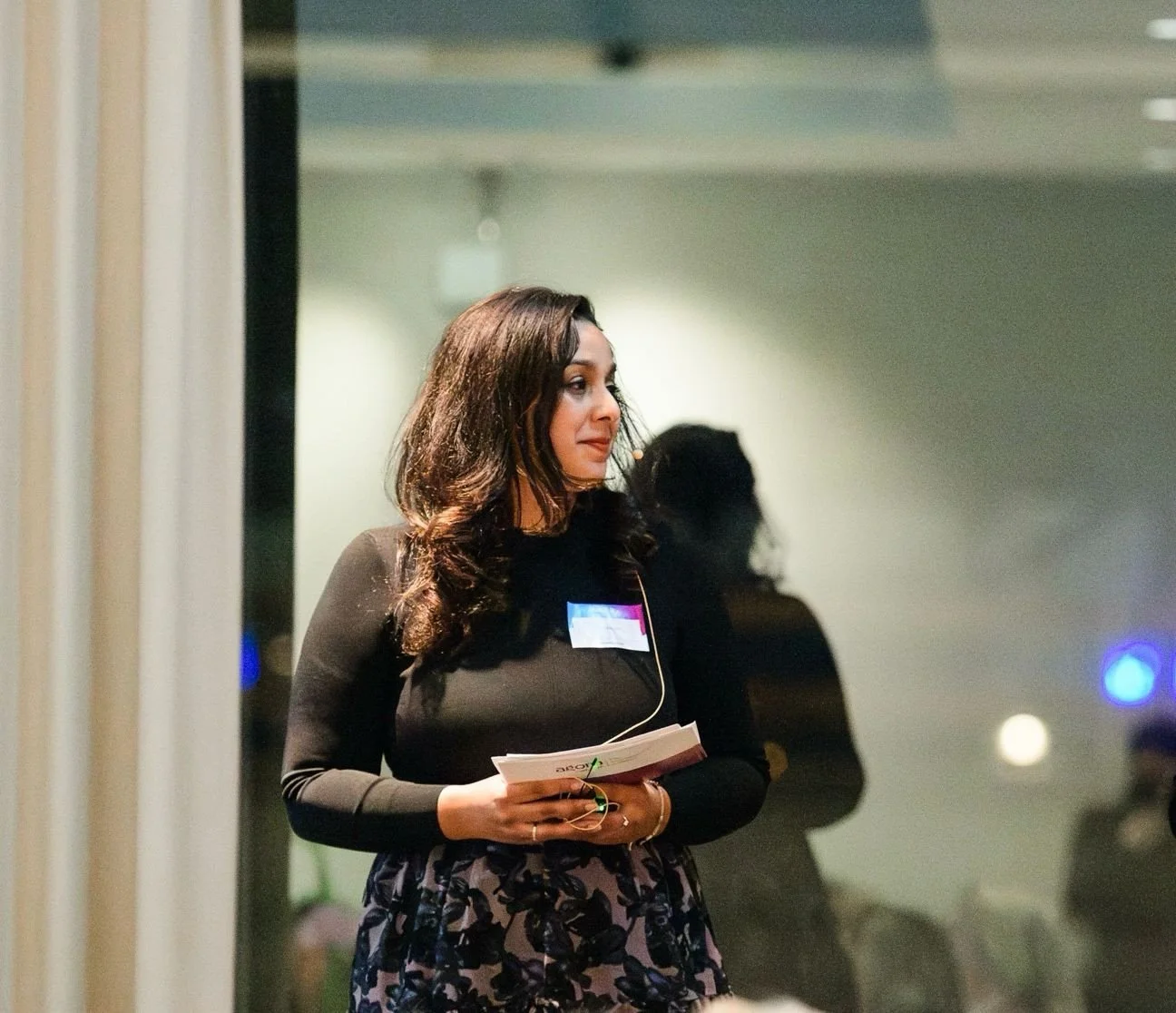
Ignatia Mannoe
Leadership that sees the person
As an independent consultant, Ignatia focuses on organizations that want to become more inclusive, safer, and more effective—not just on paper, but in their behavior, culture, and systems.
Over time, her focus has shifted.
"I wondered: why do we keep running into the same patterns? So I started looking into what people actually need to feel heard, seen, and valued. From my own experience, I know that when you have that, you start to realize your full potential."
This is reflected in her leadership style.
"I'm a collaborative leader. I often recognize someone's potential before they do. And I help people bring that out—but in a safe way."
For her, leadership is all about balance: staying true to yourself, but also daring to grow by stepping outside your comfort zone. Gentle with people, sharp on the details.
Daring vs. Connective Leadership
According to Ignatia, leadership has been dominated for years by what she calls “daring leadership.” It is the approach that sets the direction, establishes boundaries, and drives change. Focused, results-oriented, confrontational.
"That's certainly necessary," she says. "But the balance has been lost."
What we need more of is "caring leadership" or "connective leadership."
"A greater focus on people. More supportive leadership that recognizes and empowers people. Not just focusing on numbers, but also on well-being and equality."
And that, she believes, is precisely where the key to real progress lies. Both are necessary, but they must be in balance.
Adapting to Survive
Throughout her career, Ignatia has primarily worked in environments with a lot of masculine energy. That takes a lot out of you.
"As a woman, you end up conforming. You constantly feel that inner conflict: Do I stay true to myself, or do I go along with the crowd to be accepted?"
For women with a bicultural background, that struggle is even more complex.
"You have to deal with prejudice, with systems that aren’t always fair—or, to put it better, equitable. And on top of that, you’re a woman. That makes it challenging at times. While women often hit a glass ceiling—invisible, but breakable—bicultural women frequently face something even tougher. A concrete ceiling. More layers, more obstacles. And fewer people who look like you at the top. No role models, little confidence that it’s possible because you don’t see it.”
From Silence to Speech
Early in her career, Ignatia recognized situations in which she was underestimated. Misjudged. Pigeonholed.
"For example, I was immediately assumed to be the secretary instead of the auditor, without anyone even asking."
Like many young women, she didn't always know how to respond.
"Our culture teaches you respect and courtesy. You give others space first."
But looking back, she sees things differently.
"You have to make your space. You don't have to be rude all the time or on purpose. But ask questions. Speak up about what you see and feel. Don't wait for your turn."
The biggest obstacle: holding yourself back
According to Ignatia, the biggest obstacle often isn’t external, but internal.
The doubt: Am I good enough? Do I really add anything? Is my voice important enough?
Her advice is radically simple: “Ignore that voice. Just speak up.”
The Power of Visibility
For Ignatia, making an impact starts with being visible.
"You can wait for someone to notice you, but then you'll be waiting a very long time."
Visibility means taking risks and being bold. Speaking up. Showing yourself, even when it’s nerve-wracking.
"Don't be invisible."
That is precisely why she sees an important role for Udaya.
A platform where people not only network, but also feel at home.
"Successful people often come from strong networks. Wouldn't it be wonderful if we could build a network like that—one where we can connect, grow, and support one another?"
These elements come together at the Udaya Captain's Dinner. Three women share their stories—not only their successes, but also the obstacles they have overcome.
"These are women who have broken through a concrete and glass ceiling," says Ignatia. "When you see that, you think: if they can do it, so can I. So why can't I?"
The message
If she could share one message with women who want to make an impact, it would be clear:
"Dare to show who you are."
Don’t wait. Don’t conform until you disappear. Don’t hesitate until you come to a standstill.
"You have something to say. You have something to contribute. So use your voice."