Navratri and Leadership: The Power of Women Who Bring About Change.
Within the Dharmic tradition, Navratri symbolizes Shakti—the power, energy, and inner resilience that make change possible. But Shakti is not merely a religious or spiritual concept. It can also be seen as the power to remain true to your values, take responsibility, and make an impact in the world.
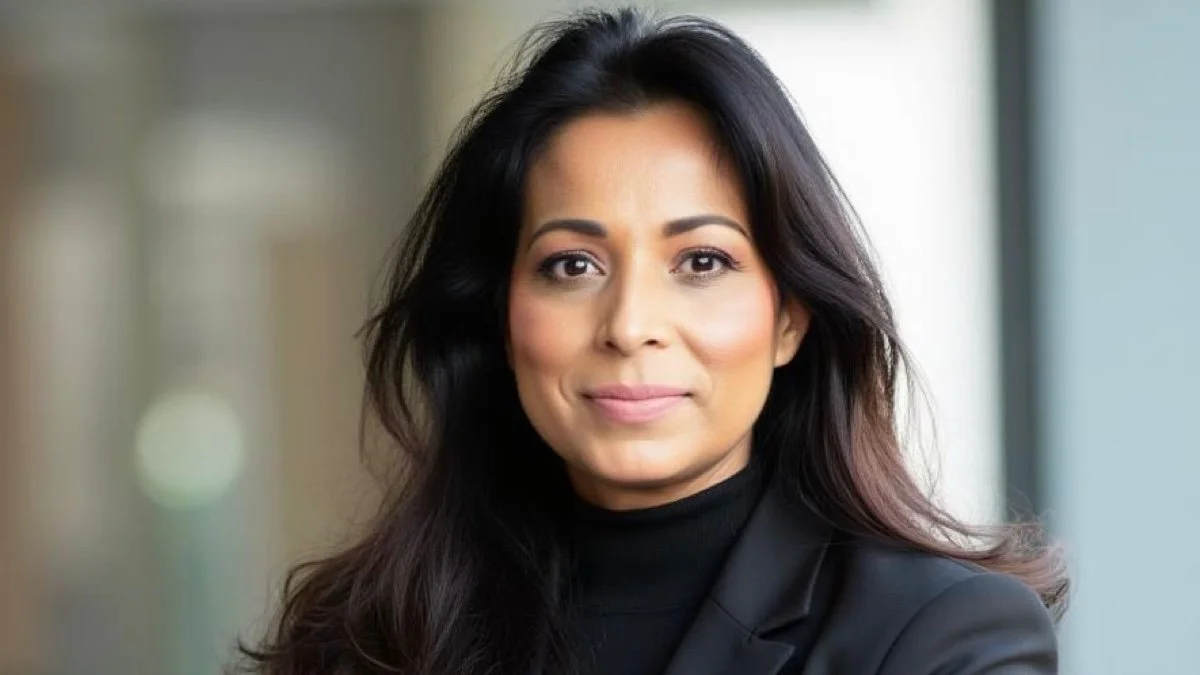
Artie Debidien
AtUdaya, a platform that brings together professionals and leaders around dharma, leadership, and social impact, we believe that this inner strength is essential for leadership today.
At the Udaya Captain’s Dinner on May 21, 2026, in The Hague, three female leaders will discuss their personal journeys, the challenges they encountered along the way, and how they exercise leadership in their own contexts.
In the lead-up to this interview, we spoke with one of these captains: Artie Debidien. Artie is an experienced supervisor, director, and former CIO/COO. She has more than 25 years of experience in technology, transformation, and leadership at the board level, particularly at banks and insurance companies. These days, she is even more dedicated to fostering leadership that connects technology, people, and social impact as a guest lecturer at Erasmus Executive Education and Board Company.
Shakti literally means "power," but to me it primarily means "strength" and "capacity." The strength to keep moving forward no matter what, even in the absence of power!
For some, Shakti is a religious concept. For others, it is a spiritual symbol. But for Artie Debidien—a regulator, executive, former IT leader in the financial sector, and mentor to women—it means something much more personal. It is not an abstract concept, but a guiding principle in her life and leadership.
“When I hear the word ‘Shakti,’ I don’t think of power,”she says.“I feel strength and the ability to keep moving forward no matter what, even in the absence of power. The energy and inner strength to cope with setbacks, to stay true to your values, and to pick yourself up and keep moving forward time and time again.”
According to her, that strength doesn't have to be harsh.
“It can also be a gentle strength—the strength to protect your principles, to stand up for what you believe in, to forgive, to show compassion, not to try to convince others, but to be yourself tirelessly.”
Growing Up Amid Expectations
Artie grew up as the only daughter in a family with three brothers, in a household where religion and tradition played a major role. There were pandits on both sides of the family. So the word “Shakti” was never just an abstract concept.
But the reality of growing up as a girl also came with its own set of limitations.
“In many traditional families, boys have it easier. I did my homework at school and helped out with the housework at home. All the while, you were essentially being prepared to get married, start a family, and follow the norms of your family and culture.”
That feeling—that she wasn't completely independent—wasn't limited to her personal life. In her professional life, too, she had to carve out her place.
In a Man's World
At age 25, Artie started working in the IT sector at banks and insurance companies in Amsterdam. It was the early 1990s. A world in which almost no women worked—let alone young women from immigrant backgrounds.“I was actually always surrounded by men.”
Instead of backing down or settling for less, she decided to take a different approach.“I believed I had to be three times better than I was—or than others are. So I delved deeper into the subject matter, but also broadened my perspective. Not only did I become stronger in terms of content, but also as a leader. Growth, development, and lifelong learning became my driving force.”
She also made a fundamental agreement—or social contract—with herself.
“I ask for a chance three times. If I don’t get it, I move on. No complaining. No stomping my feet. Just keep going.”That strategy transformed her career. With every new role, she continued to grow, taking on greater responsibilities, higher-level positions, and larger teams.
The Power of Change and Progress
Throughout her career, Artie almost always worked on transformation projects—in environments marked by cultural resistance, low willingness to change, and complex stakeholder dynamics. She equipped organizations with clear strategies and, through the use of technology and leadership, guided them toward better results. These were companies that needed to be built from the ground up, merged with other entities, further developed, or restructured. All of this was not without risk.
That fits with the way she views the world.
“I see so many women doing just that: appreciating the current situation, keeping their eyes on a goal on the horizon, and then disciplinedly following the path of improvement—in their own growth, as well as in their relationships, households, families, and communities. They see what is there, envision what it could become, and commit themselves to making it better.”
According to her, that is exactly what Shakti stands for: the energy to bring about change, with or without formal power.
The Hidden Shakti
Still, Artie notes that women often still have to hide their power or strength.“In corporate settings, you sometimes have to make yourself seem smaller than you really are,” she says. “Because it’s still not always accepted for a woman to come across as too strong or to be the one with the upper hand in terms of expertise.”
Research shows that women are interrupted more often in meetings and that their ideas are sometimes only taken seriously when a man repeats them.“So sometimes you hide your Shakti—for the sake of peace and harmony.”
Fear as the biggest obstacle
According to Artie, many women are held back by fear—for example, by doubts about whether the next step is safe enough.
Fear of losing a job.
Fear of leaving a relationship.
Fear of losing financial security.
“Sometimes you’re so influenced by your surroundings that you think the future will be worse than your current situation. Personally, I’ve always focused on seeing and seizing opportunities—that’s taken me a long way, and I hope the same for others.”
That is why she strongly believes in solidarity among women.
You can share Shakti
“Shakti can be distributed,” says Artie. “If you’re feeling less empowered at any given moment, another woman can reach out to you.”She calls it sisterhood, a network of figurative sisters. When someone is stuck—whether at work, in relationships, or going through a difficult phase—another woman can provide just the nudge needed and the strength to keep going. “But you have to have the courage to take that hand.”
Why This Conversation Is Important
That’s exactly why Artie finds Udaya’s work so valuable.“I’m familiar with many networking organizations, but I was really surprised by the quality. The content, the speakers, the atmosphere at the last event—everything was just right.”
What appeals to her most is that people can be completely themselves there.“You don’t have to give up your cultural background to be successful professionally. You can be both Dutch and Hindustani, and both identities can coexist.”
At the upcoming Udaya Captain’s Dinner, three women will share their personal stories—not as perfect success stories, but as real journeys filled with obstacles, choices, and growth. And according to Artie, that’s exactly where the power lies.“It’s called a Captain’s Dinner, but really, everyone is a captain. Everyone has a story. Everyone has been on a journey.”
The Message
If she could share one message with women, it would be simple.“Don’t downplay yourself, don’t put yourself last—the world will learn on its own how to deal with your strength. Be bold, be yourself, and shine like the star that you are.” Andwhat if you’re feeling a bit low on strength?“Borrow it from one another. Because Shakti isn’t just within you—it arises precisely when we lift each other up.”
Artie's story shows that leadership isn't about positions or titles, but about the courage to stay true to your values, even when it's not easy.